Monday, January 18, 2010

i try to be like grace kelly, but all her looks were too sad

In fashion, there is something that I like to called The Holy Trinity of Style. Consisting of three women all born in the same year, the Trinity is the epitome of elegance, timelessness, and are always cited as icons. One-third of the Trinity is Grace Kelly. Born in 1929 (the same year as fellow Trinity members Audrey Hepburn and Jackie Kennedy) to a wealthy Philadelphian family, Grace Kelly personified regal beauty with an air that only true royalty could achieve.
Everything that Grace wore - from espadrilles, capris, Helen Rose designed gowns, to her ubiquitous Hermes Kelly beg and silk scarf tied around her neck or over her hair - screamed style. Her look was timeless, and is constantly channeled and rechanneled on the runways. She stuck to what worked for her body her entire life - light makeup, soft curled blonde hair, and tailored feminine pieces were constants. Grace adored to wear headscarves, and hats of any variety - from white wide-brimmed straw hats to small beaded pillbox hats - with outfits casual or formal. The magic of Grace is just this: whether casual or formal, she always looked the part. She was a blend of regal ice queen and warm-hearted starlet from a large family. She relied upon classic tailored pieces, and never was caught up in following trends. She was even for wearing the same dress twice! She wore a light blue satin dress to both the premiere of The Country Girl and the 1954 Oscars ceremony - and completely pulled off a repeated look that has now been sighted as elegance in its purest Hollywood form.
It is nearly impossible to separate her style on and off the screen, as her career namely consisted of playing successful, wealthy (and icy) women. Her outfits in To Catch a Thief (think bright summer clothes on the Riviera), Rear Window (the wardrobe of a Manhattan sartorial queen), and High Society (channeling something very similar to her real-life: a Philadelphian socialite) are of particular note.
Though some people cite her acting skills to be subpar to her style skills, with her affected Continental accent being called upon more than once as proof, I love watching Grace on the screen. She lights up every frame she is in with warmth, beauty, and excitement. She never goes unnoticed when she is onscreen. An interesting excerpt from Grace Kelly: A Life in Pictures quoted Grace admitting her disdain for her role as a fashion icon. She said that "the publicity created around my brand image, made exemplary above others, sometimes annoyed me enormously. It's tiresome to be always cited as an example."
After eleven films (and one Oscar for her role as a dowdy, neglected wife in The Country Girl), Kelly retired from the film industry and married Prince Rainier of Monaco, dedicating the rest of her life to her family and new home. Though she nearly came out of retirement in 1964 to star in Hitchcock's psychodrama Marnie, she ultimately had to turn it down upon disapproval by the people of Monaco. She would never act publicly again.

Sunday, January 17, 2010

it feels odd to be jealous of a three-year-old...

... And yet I am. Sporting a classic quilted leather Chanel shoulder bag, leather boots, leggings, scarves, and fierce Alexa Chung hair, this little girl rocks hip fashion way more than I ever could.

(courtesy: The Sartorialist)

Wednesday, January 13, 2010

rain in the sky, make the world fly, into time, beg me your time

A drug exploitation film from 1969, The Big Cube stars Lana Turner as former stage actress Adriana Roman, who is unknowingly ingesting LSD by her bitter stepdaughter following the death of her husband. Her stepdaughter Lisa (Karin Mossberg, whose thick accent explained by the fact her character was shipped off to Swiss boarding schools at a young age) is a spoiled and naive young woman who quickly falls in with a hard-partying group of attractive LSD users, her best friend being Bibi, a ditzy and rather promiscuous redhead who gyrates her way onto the screen and does a complete striptease within the first half-hour of the film. Lisa quickly catches the eye of Johnny (George Chakiris, good in his role but not quite the same without the Puerto Rican accent and dancing with Rita Moreno and Russ Tamblyn), a playboy med student who takes a quick liking to Lisa's wealthy way of life.
After Lisa's father is killed in a boating accident, Johnny convinces her to give Adriana pills full of LSD to get 'revenge' and drive her to insanity, therefore speeding up the inheritance so that Johnny and Lisa can be wed. As their plan goes into action, Lisa's wardrobe changes from white minidresses and pearls to dark navy sweaters and military style coats. The film is a delightfully campy film in the way that the hippie generation is portrayed as spoiled evil children out to destroy their parents and ultimately themselves. But they dress so fabulously when doing so!
Whether it is the drug 'Queen Bee' in a black-and-yellow midriff top and bell bottom ensemble with pink eye pasties to match, or Bibi running across screen in a crystal bandeau top with thick white suspender-type straps connected to a short white miniskirt, or Lisa's see-through sleeves on her wedding dress that is only rivaled by her teased hair (similar to International Velvet or the entire cast of Valley of the Dolls).

Tuesday, January 12, 2010

cinemaspiration: Love and Other Disasters

This is the first of I hope many posts about strictly film-inspired fashion. I know I have done posts like this in the past, but I've thought of a word for it now so it's quite different now (the word being 'cinemaspiration,' as in aspirations brought on by cinema - if this word already exists and is in use, I don't want to know).
Love and Other Disasters, a perfectly charming romantic comedy, inspired by equal parts Breakfast at Tiffany's (characters are seen at various points watching and/or discussing the classic, and Murphy's character is stylistically inspired by Holly Golightly) and Sex and the City (the films shares the same atmosphere of the young and fabulous looking for love in a big city, only imagine Carrie Bardshaw if she were a Brit-Spaniard raised in America and employed at UK Vogue). Brittany Murphy plays Emily 'Jacks' Jackson, a hyperactive talkative gal with a fantastic wardrobe and even more fantastic friends. Tallulah, an emotional poet who is partial to hash brownies and impractical relationships, is Jacks' best girl friend and keeps the story entertaining with her bizarre and rather inappropriate comments. Jacks' other best friend is her roommate Peter Simon (the adorable Matthew Rhys), a gay screenwriter consumed with the romantic fantasies occurring in his head rather than looking for love in reality. His constant struggle to meet the elusive David Williams, an art curator at Sotheby's he has never actually met, is only equalled by his struggle to write a screenplay that represents the truth of his daily life. The main romantic triangle in Jacks' life is between her ex-boyfriend James, who she sleeps with regularly mostly out of pity but demands no relationship form between them, and Paolo, a gorgeous Argentinian who interns for a photographer at Vogue and who Jacks mistakes throughout the entire film as gay. For the girl who claims to have a remarkable 'gaydar', she misses every single sign that the boy throws her way.
Jacks possesses the kind of wardrobe that every young cosmopolitan-minded girl desires to have. Whether she is running around her apartment in fantastic silk and lace lingerie, or running around town in sparkly dresses and little jackets, she is never without a thick swipe of eyeliner or five-inch red-soled heels (you know the ones, wink wink). She sports Bardot eye makeup and wispy Audrey Hepburn bangs on even the most casual occasions. She mixes denim and sequins, and wears bubblegum pink in the most serious way - even on her eyelids.
It's a completely worthy film for anyone looking to laugh, love, and be inspired. A special treat is when Gwyneth Paltrow and Orlando Bloom pop up at the end of the film. Catch it on Showtime now, or add it to your Netflix queue pronto.

Wednesday, January 6, 2010

because maybe you're gonna be the one who saves me, and after all you're my wonderwall

Here are some great images of the elusive Jane Birkin film Wonderwall. A fantastically trippy film set to the Eastern musical stylings of George Harrison, Wonderwall is about a tightly-wound scientist who becomes wrapped up in the psychedelic world of his neighbor, a gap-toothed model named Penny Lane. He watches through a hole in the wall into her life, as she poses for advertisements with her equally gorgeous beau and parties with her friends. Down the rabbit hole and through the looking glass he goes, as his fascination becomes an obsession, as he drills more and more holes into the wall to look at her from different perspectives.
The plot of the story is not what drives this film, however. It is the musical and visual aspects that make this production what it is. The score, which Harrison conceived to be the complete opposition from anything 'Beatles', is successful. No longer flirting with the sitar, Harrison fully indulges in his Eastern interest, creating a beautiful soundtrack that is both subtle enough to fit the film and yet empowering enough to not go unrecognized. Visually, the film is absolutely stunning. Contrast between the professor's dreary apartment and Penny's swirl of neon colors, per designed by the design collaborative the Fool (also responsible for the digs of George Harrison and Pattie Boyd).
Filmed about a year after Birkin exploded onto the scene in the film Blowup, Wonderwall successfully captures the essence of the late 60s - a blend of psychedelic innocence, false eyelashes, neon tights, flowers and butterflies, drugs, and the electricity of Swinging London.

Tuesday, January 5, 2010

i wish my life were a nancy meyers film

After watching It's Complicated, I wanted to write about how beautiful it was and how I wanted to live in so many romantic comedies like this one. But then, I opened of the latest Newsweek to find that they had beat me to it. So I'm shifting my focus.
Despite what a movie nut I am, there is one thing about typical screwball and romantic comedies that I do not appreciate, due to their lack of realism: it's the moment in the film where the Boy meets the Girl for the first time, usually in a chance situation between two characters that otherwise wouldn't meet. In the movie The Holiday, Eli Wallach's character refers to this incidence as a "meet-cute." It's a cutesy way that fate intervenes and causes these two people to come together.
Found nowadays in the films of Nancy Meyers (It's Complicated, The Holiday) and Nora Ephron (Bewitched, When Harry Met Sally, Sleepless in Seattle), this technique has been seen in countless movies. In Serendipity, John Cusack and Kate Beckinsale meet in Bloomingdales after reaching for the last pair of gloves at the same moment. In It Happened One Night, spoiled socialite Claudette Colbert runs away from her heiress father right into alcoholic ex-reporter Clark Gable, when they argue over a seat on the bus. In Notting Hill, bookstore owner Hugh Grant spills orange juice on A-list actress Julia Roberts, causing them to meet. In (my favorite musical) Singin' in the Rain, Gene Kelly jumps into the car of aspiring starlet Debbie Reynolds while trying to escape his fans. (500) Days of Summer, released last year and featuring two of the most adorable people in Hollywood, featured a "meet-cute" between Zooey Deschanel and Joseph Gordon-Levitt after Deschanel recognizes the tune by The Smiths that Gordon-Levitt is listening to on his iPod.
Even used in non-romcoms like Hitchcock's The Birds, the "meet-cute" technique is used. Party girl Tippi Hedren meets mama's boy lawyer Rod Taylor at a bird shop when she pretends to be a salesgirl helping him choose a gift for his sister. In serious dramas like Woody Allen's Manhattan and Match Point (and also his lighter fare like the classics Annie Hall and The Purple Rose of Cairo as well as his recent works like Vicky Cristina Barcelona and Whatever Works), he employs the "meet-cute." In Match Point, Jonathan Rhys Meyers falls for Scarlett Johansson after flirting with her at a family party.
A technique used in the majority of films for the past 70 years, it's frustrating that these meet-cutes do not actually happen in real life. I am completely dependent upon these impossible events in order to meet someone wonderful. Is there anyone out there that has had a "meet-cute" happen to them, or heard of one happening to a friend? I need a little faith that these things can happen one day to me. Otherwise, I should just buy a lot of cats and take up knitting or woodcarving, and just call it a day.

Monday, January 4, 2010

nobody has to guess, that baby can't be blessed, 'till she sees finally that she's like all the rest

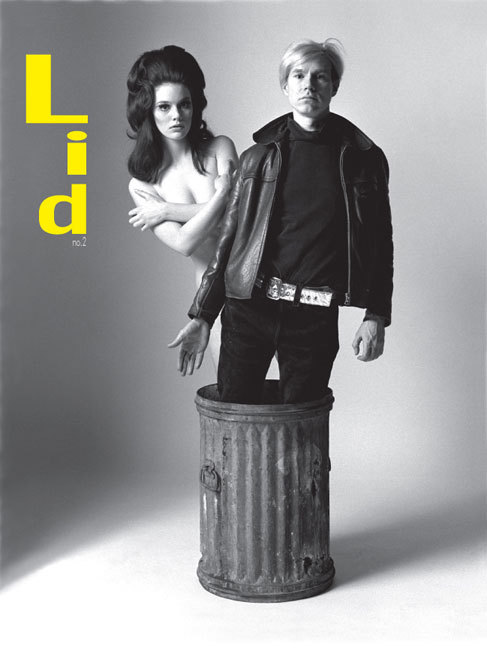
I didn't want to talk about this for a few weeks because it seemed too soon after the tragic passing of Brittany Murphy to talk about her. Though I know that waiting two or three weeks isn't much better, but I didn't want to seem like I was jumping on the bandwagon of sensationalizing and deconstructing her demise like a lot of other people were. So I waited to say what I thought. And I'm sure they're people out there that will disagree with me, and I'm sure with good reason, but this is just what I see: in some ways, Brittany Murphy was our generation's Edie Sedgwick.
George Hickenlooper, director of the Edie biopic Factory Girl, almost cast Murphy in the lead role, before ultimately giving it to Sienna Miller. They're relationship soured after Brittany married Simon Monjack, who Hickenlooper called a "con man." I think it's interesting that a similarity enough for Murphy to play Sedgwick was seen several years ago. Though I don't really know anything about the "inner demons" that Brittany Murphy fought, despite what tabloids and entertainment television shows tell me, if she did suffer troubles, that would further her similarity to the late Sedgwick. While Edie Sedgwick spent parts of her life in a mental hospital, Murphy portrayed a young woman in the film Girl, Interrupted that was anorexic and the victim of sexual abuse from her father, both troubles that plagued Edie's real life.
But instead of comparing the devastating parts of the lives of these two women, I want to focus on the positive similarities. Both women were effervescent social butterflies that fluttered around, lighting up the lives of people they encountered. After her passing, former love Ashton Kutcher called Brittany "a little piece of sunshine," whereas Donald Lyons called Edie "a creature of the sunlight, with a darkness behind her that we knew no details about." These girls had vibrant, beautiful personalities and were bright lights in peoples' lives, despite whatever darkness they felt. In Uptown Girls (one of my personal favorite girlie rom-coms), Murphy portrays Molly Gunn, a "poor little rich girl" of sorts much in vain of Sedgwick's persona - she is a fantastic girl-child without worry and doesn't see money as an issue until she runs out of it. Her life is a fairy tale, full of gorgeous clothing and penthouse digs.
Although I never met them, I will miss these two fantastic women sincerely.
Related Posts Plugin for WordPress, Blogger...